The office in my crowded Brooklyn apartment is lined with photos. My niece and nephew hang somewhat loudly next to black and white landscapes of far off places. I had twelve days vacation coming and I needed to get out of New York. Spring was around the corner. Walking. Mountains. Distance. Quiet. Something shifted and I found myself looking at Buddhist retreat centers in Japan. But those pictures of mountains had me thinking of long walks — a pilgrimage I had read about once, on one of the smaller Japanese islands. Shikoku. I booked a ticket that same day.
I first went to Japan in 1997. I remember the peace park in Hiroshima, the statue of the young girl who died of cancer, the origami cranes thick like English vines. Every month the park clears away more than a million paper cranes, most folded by children - each one a tiny prayer, a pledge of peace. I remember eating gyoza, and two elderly women offering me the remainder of their lunch. Perhaps I looked hungry and broke. Well. I was hungry again. I needed nourishment that would carry me.
I'll be Kobo Daishi and you be Bosatsu I'll carry water while you catch fish!
"Why have you come here?" A pilgrim asked on my first day. Devotion. Repentance. Guilt. Love. Hope. "Maybe I'll know when I leave." I avoided the question.
The Shikoku Pilgrimage is 1200 kilometers, 88 temples, 40 days on foot. Its founder, Kobo Daishi, was born on Shikoku in 774. He is said to have visited or founded every temple on the route, leaving behind statues he carved, teachings he imparted - mementos of passing. He died in 835 but is not considered wholly dead. Do gyo ni nin. Two travel together. When you walk the pilgrimage, Kobo Daishi walks with you. So I became a henro, shed one role and assumed another, probably not for the last time.
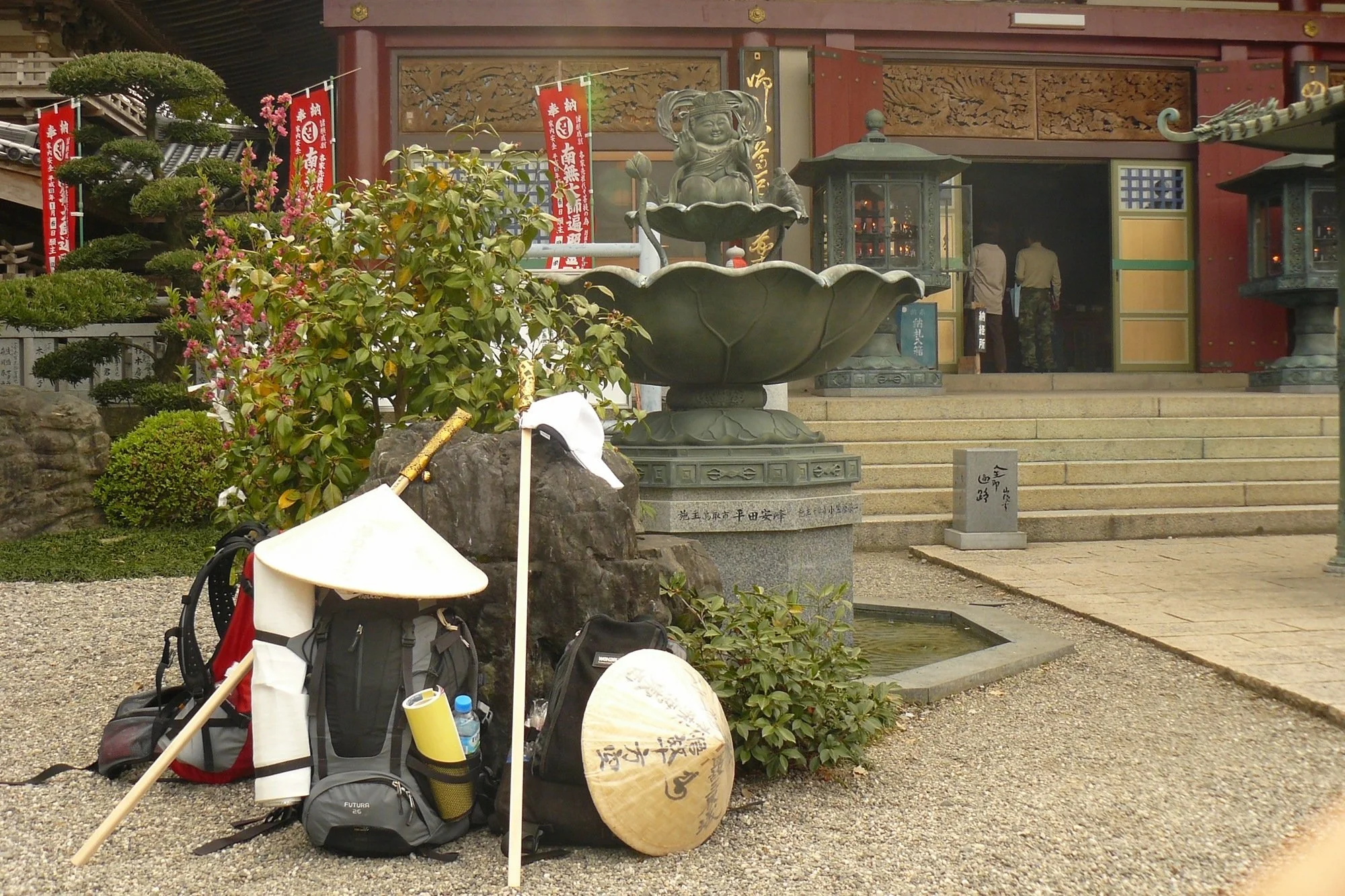
"Before beginning, rinse your mouth, wash your hands clean, and offer candles and incense to the Buddha…
Calm your mind, and place your hands together for prayer."
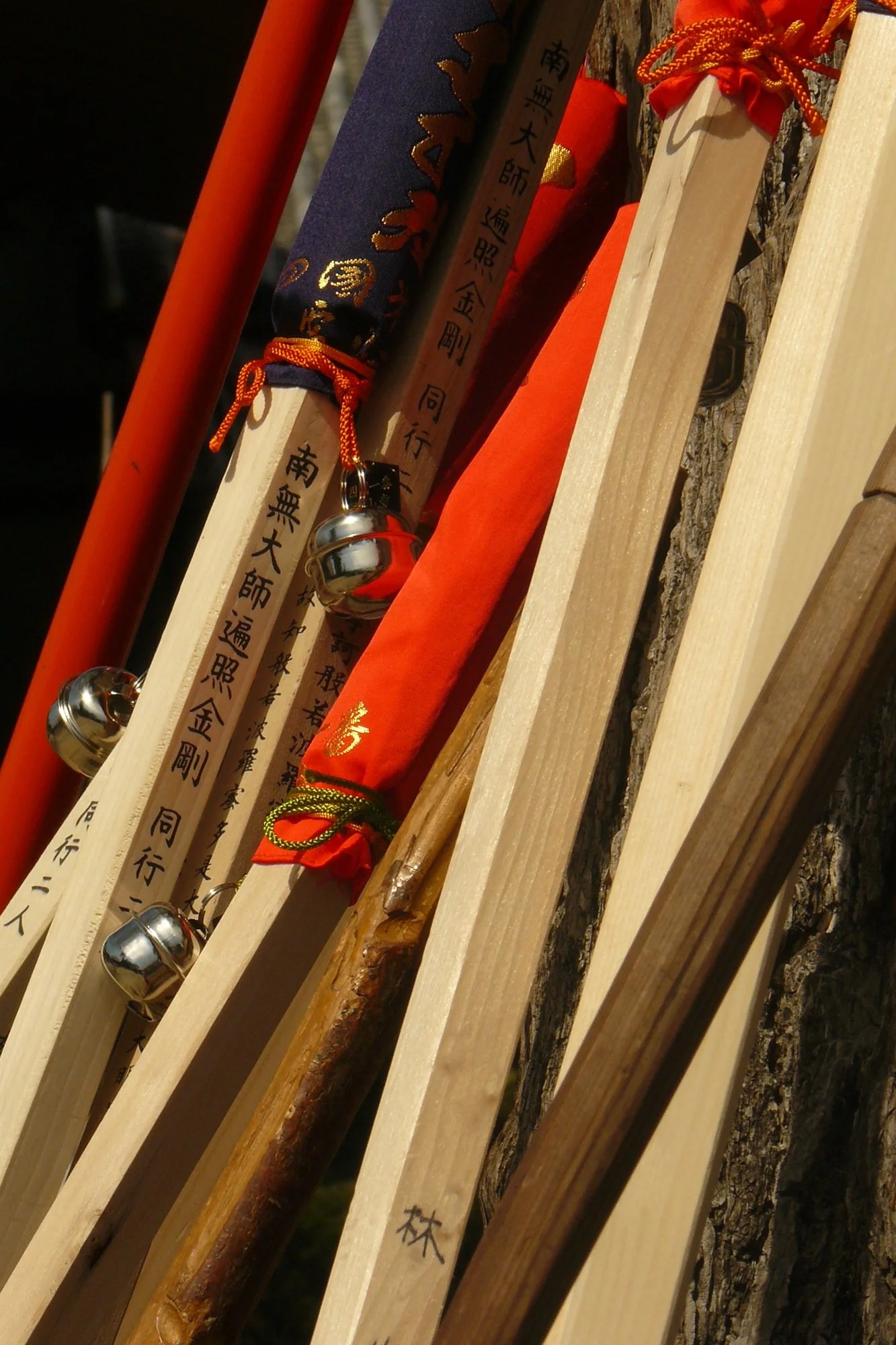
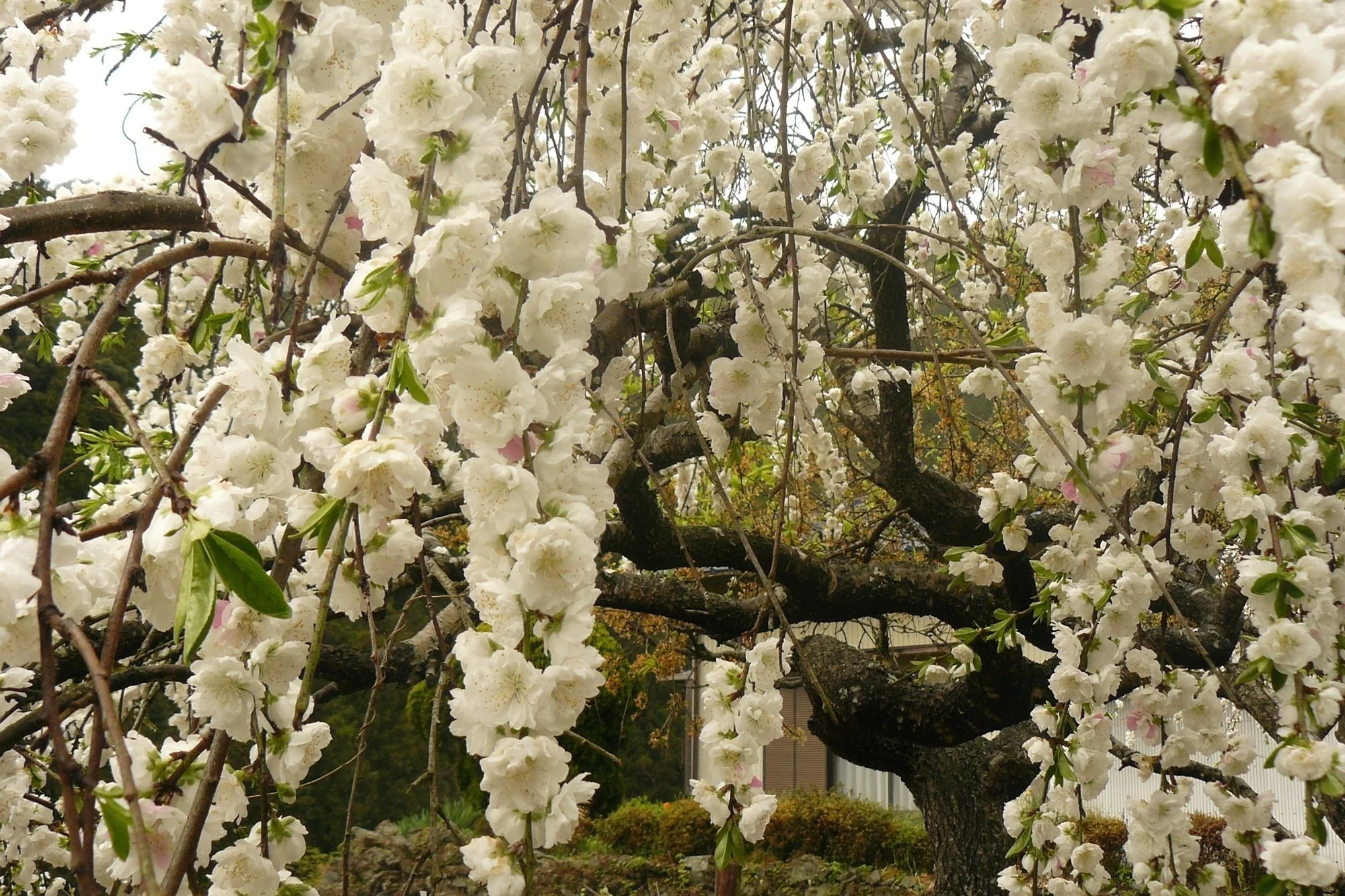
Recite the Heart Sutra at the main temple. At the secondary temple, pray in gratitude to Kobo Daishi. Or don't. The white robes, the staff, the bell, the hat, the beads, the sutras, the chanting — none are obligatory. Still, ritual gives structure, a beginning, a tone, a rhythm. Contemplation of the Heart Sutra became central to my pilgrimage. "Form is emptiness. Emptiness is form. Form is not different from emptiness, emptiness is not different from form." Standing in front of the main temple with hands clasped and head bowed, I drifted into myself. I could hear the chants from the other pilgrims, the bells ringing as people walked through the temple grounds. I could feel sun and wind, opened my eyes and watched as they danced through the cherry trees. Blossoms let go of their petals and they floated and spun, shimmered even, then gently, slowly, settled in the pools at the feet of the Buddhas.
The walking is where the work is done. But often the end of the day is spent soaking in a furo, a Japanese bath, wearing a kimono to dinner, sleeping on a tatami mat - futon and duvet, of course. Good food, good company, hot water, warm blankets. The road wears. The rest restores.
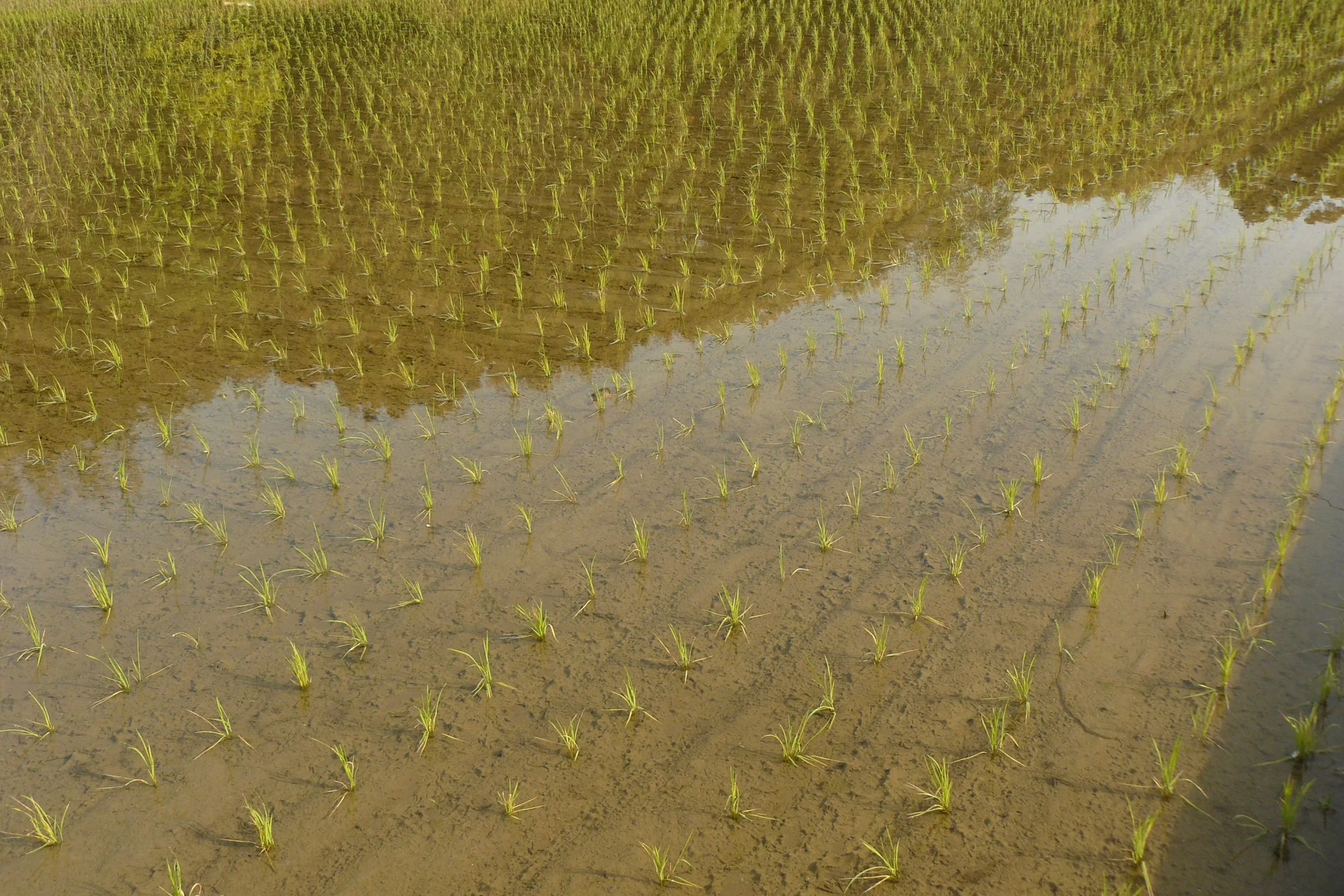
Thoughts drift as scenery changes. Everything changes. One day, the rice seedlings sprout in the greenhouse. The next, the cherry blossoms begin to fall. The fields need to be flooded. As I continued my walk, the flooded fields were planted and the cherry blossoms gone. One season ending, another beginning. Food for millions this coming fall, today these tiny plants adjust to new watery homes, wind, sunshine and stars. "No old age and death, no end to old age and death." Instead of change, perhaps I should consider cycles. In the day the seedlings were planted, in the night I ate rice. I envision connections like a spider-web, and yet it is the empty in-between that gives beauty and purpose. "No causal link…no end of causal link…"
Farmer
Pointing the way
With a radish.
Issa
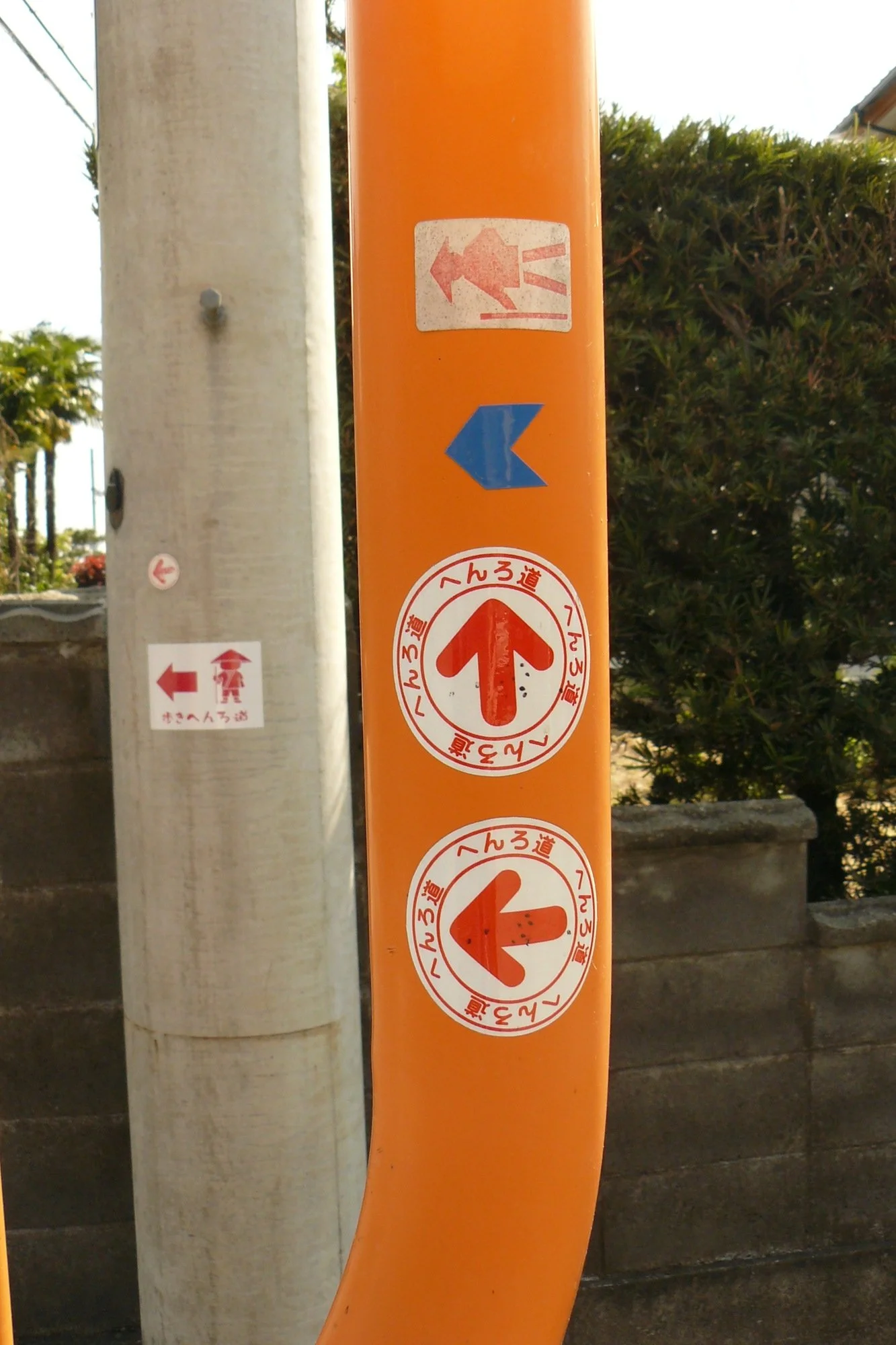
Signs are everywhere. The henro no michi, the pilgrim road, is well signed. There are dozens of different signs: tiny chevrons, arrows, carved stone pointing hands, stickers of various designs, the ever helpful passerby. Every henro carries a map. It is not possible to get lost. And yet, I did, as did many others; as does everyone at one point or another. Often there were corners on which signs pointed in multiple directions. There was a message there. Any road is the right road. Choosing is the important part. Make a decision, the signs tell me. Whatever you choose will become your path. There are no wrong directions, only different ones. "No ignorance and no end to ignorance."
As the pilgrimage continued, life as I perceived it became simpler. Daily struggles shrank to pain in my shins and calves, blisters on my feet. Worries were: where to sleep, will there be a store to buy food today? Letting go. My home life in New York City melted away step by step. The stresses of my teaching job: the ungraded papers, the parents to call, the students facing summer school, standardized tests, and graduation, each seemed to become less real. All my yesterdays seemed less real. What are memories? The select bits of past happenings — specters, shades, echoes, the whispers of what was. They tease me with perceived joy, sorrow, happiness, success, love. They push imaginings of a future that is brighter. "No suffering, no cause of suffering, no end of suffering." Memories, the Heart Sutra suggests, are emptiness, are forms, are delusion. They distract and define. How can my past not be me? And yet, how can I trust the imperfect meanderings of my mind? In the walking, I began to distinguish who I am from who I was, who I think I am, and who I wish I could be.
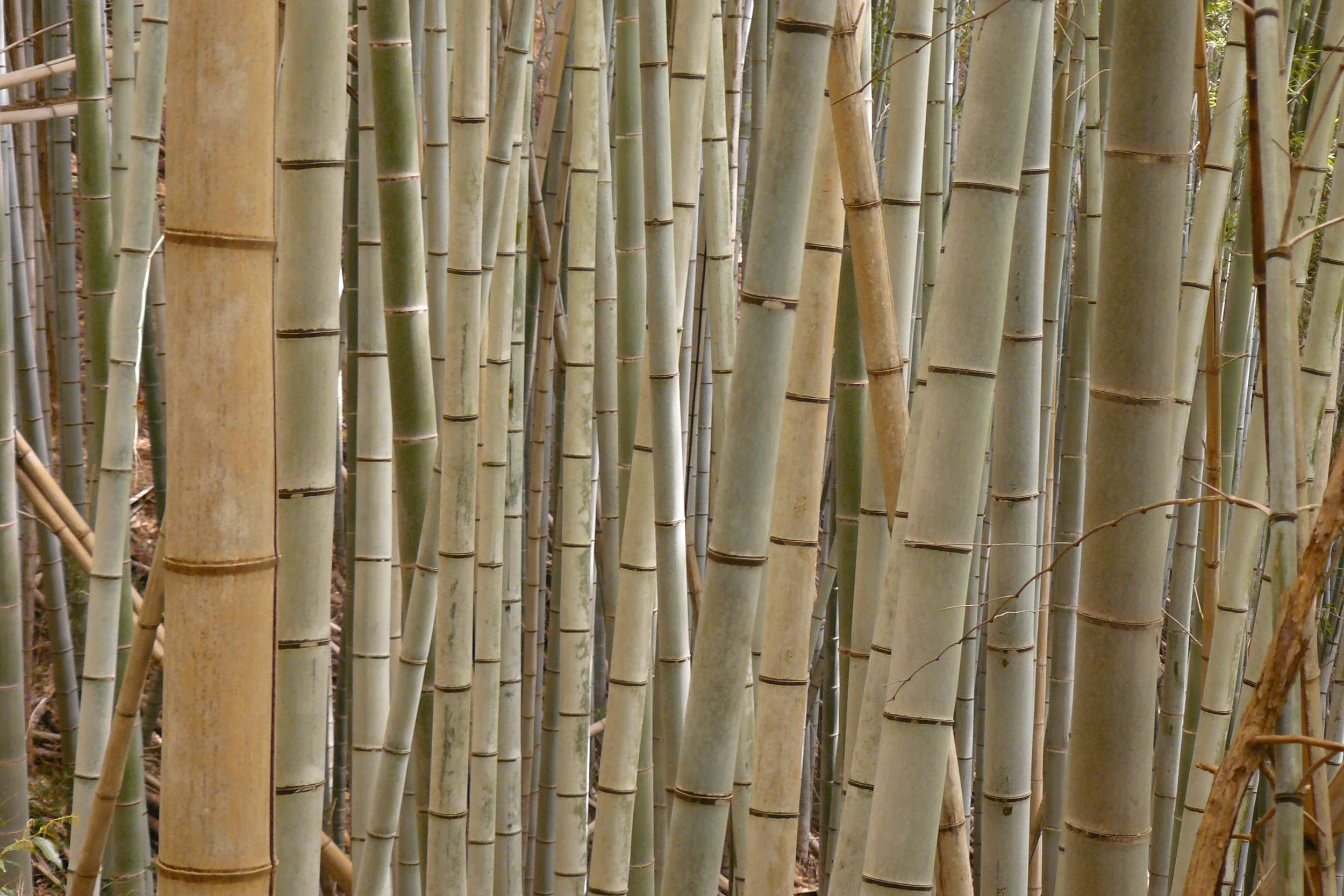
On my eighth day, I decided not to ask a fellow henro to book me a hostel and searched for the whispered free lodgings for henro apparently near most temples. These can be corners in people's homes, rooms set aside specifically for henro, or even a small unattached studio maintained for henro to come and go as they please. I found one of the latter and set up a futon. A quiet man in his mid-fifties joined me soon afterward. We exchanged basic pleasantries and then I left to wander around the village, in part looking for a market, but mostly to admire the architecture, the school, the gardens; to look for those ever present tiny touches that adorn most Japanese homes, small flourishes of personality in a necessarily dense living environment. When I returned, the man had obviously been busy cleaning the grounds of the dorm. He had piles of uprooted weeds, a small pile of litter, and was working his way around a large rock, pulling weeds from the base of the stone with a gardening tool he had brought with him for this exact purpose. Immediately, I felt a tinge of guilt. I was so caught in my own mind, my own pilgrimage, that I did not remember that there is no "I," but a series of relationships. Balance is essential. This clean, warm, comfortable shelter exists through the charity and labor of others. There are many people to whom I owe the opportunities and luxuries of each day. I bowed deeply to the man for this lesson, who nodded in reply, somewhat confused. In the morning, I left a note and a donation in gratitude for the night's rest.
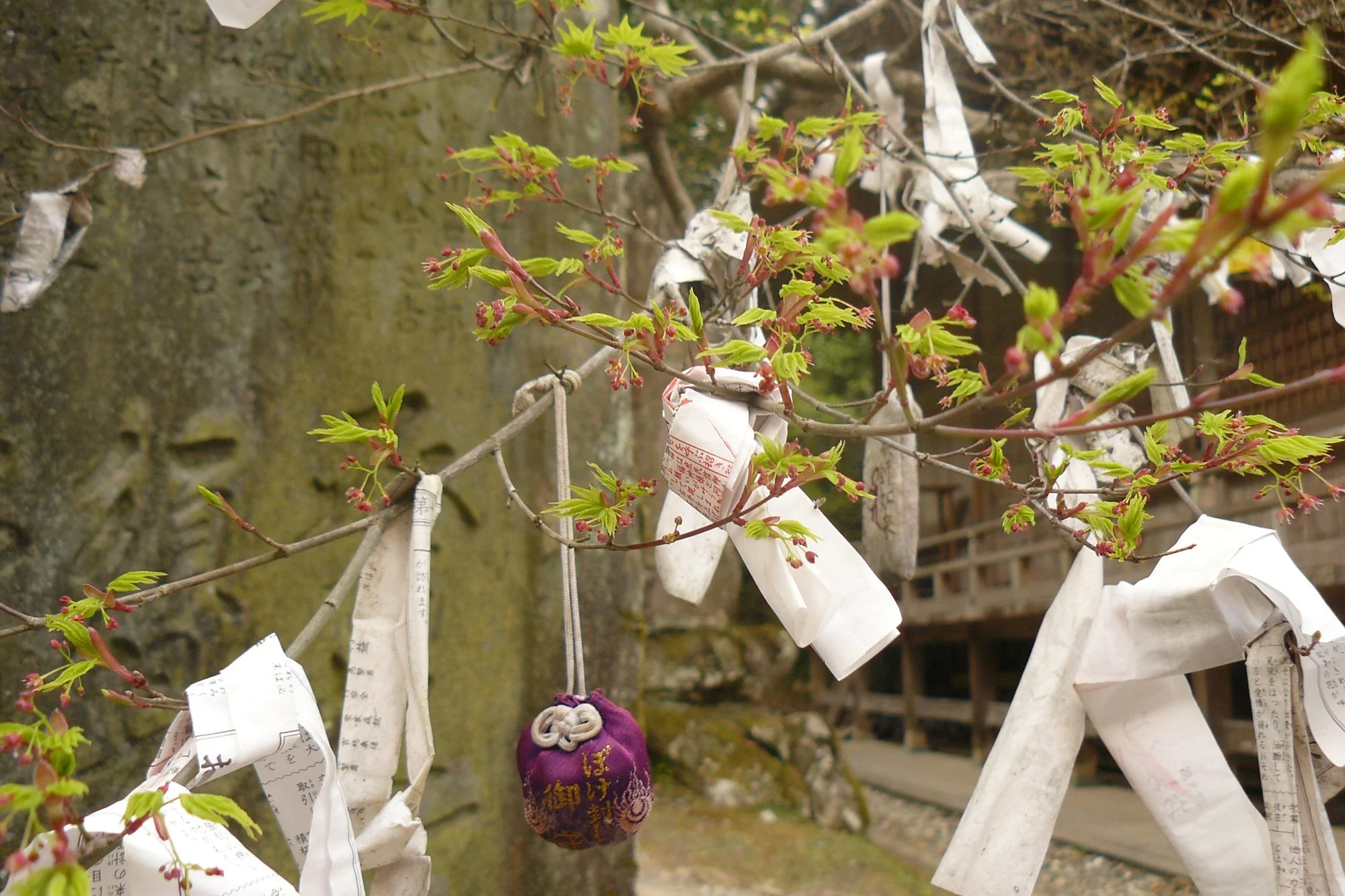
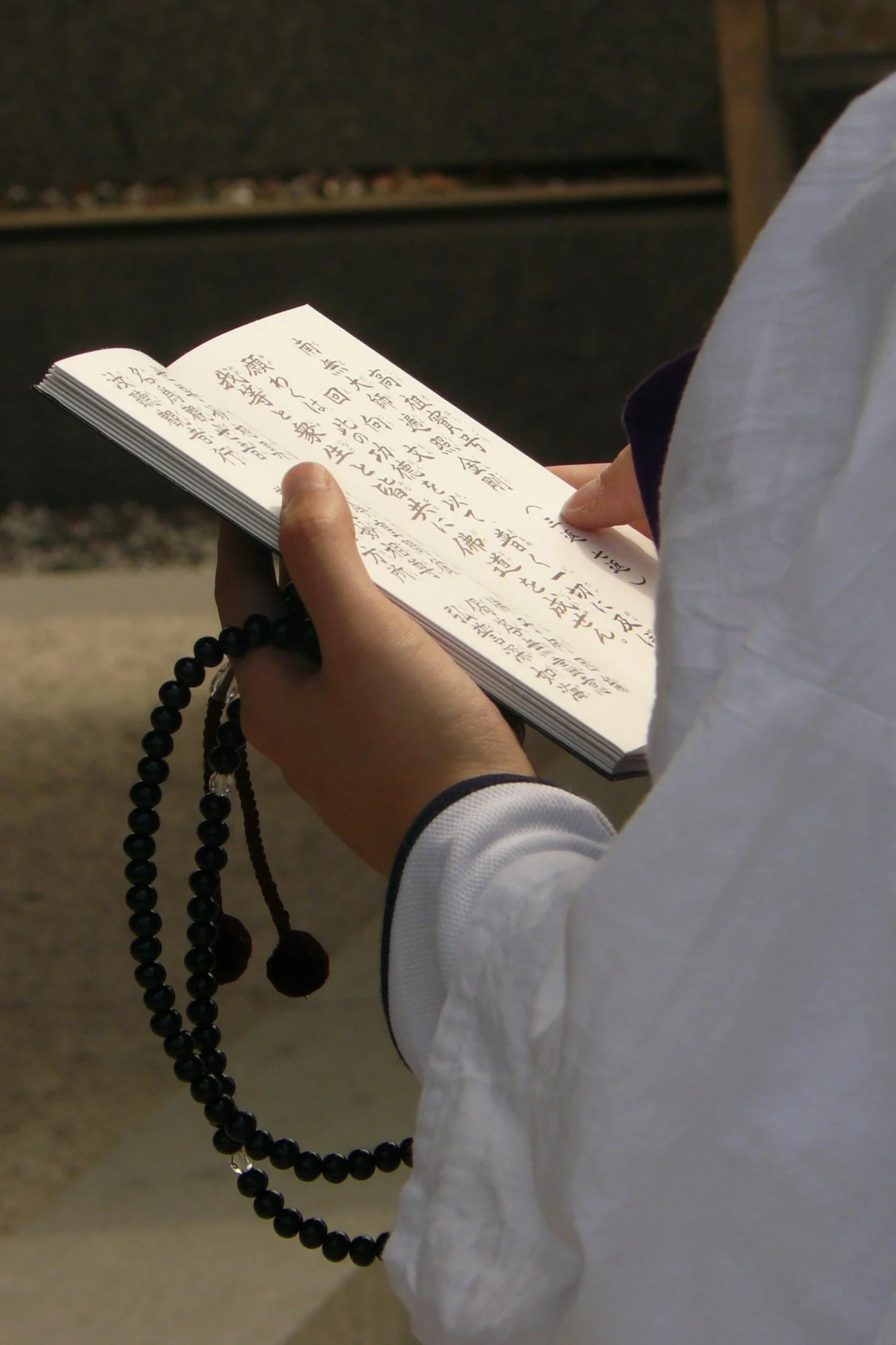
Pilgrims carry a book called Nokyo, with one spread per temple. At each stop they wait in line, Nokyo open to the temple's page, then hand the book up to a monk holding a black-tipped brush. Three stamps and an inscription in calligraphy, shodo, usually a name for the Buddha. The Heart Sutra begins with Avalokiteshvara contemplating prajnaparamita. Prajna is often translated as wisdom — the wisdom one achieves through realizing one's essential nature. I don't really know what that means. Each inscription seemed more indecipherable than the last. The Japanese pilgrims I met could not fully read them either. As my Nokyo began to fill, it became more and more precious. Each page seemed to contain a beautiful secret, not in the literal meaning, but in the flow of ink from thick, deep black heads to thin spiraling tails. What is the power of a word, a name? The Heart Sutra has two characters, Avalokiteshvara and Shariputra, a teacher, the embodiment of compassion, forsaking nirvana until all others precede her there, and a student, the vessel through which the teachings of Sakyamuni Buddha are transmitted and preserved. To know the names of these two, to utter the names of these two is to invoke enlightenment, to declare one's path, to open to dharma and begin.
Many yoga teachers begin their classes with a moment to set an intention: what I want to achieve, who and how I want to be. It can be a focal point, a purpose, some defining lines. What is achieved is rarely what is intended, but that does not mean one should forgo the effort. "Do not do anything useless." However, intentions can distract from the experience. Continuous focus on why I am here does not focus on the reality of being here.
I had thought my pilgrimage would be one of solitude and silence. I imagined myself walking through the Japanese countryside deep in my own ponderings, away from the spiraling energies of others and their entangled lives. What I encountered was quite different. Soon my pilgrimage became quite social. Apparently at random, individual walking henro began to gather one by one. I found myself in an ever growing and shrinking group. One would join while another would move on. I'd meet people, walk with them for a few days, then part. They would move on, go home, or fall behind.
The world of dew
is the world of dew
and yet and yet…
Issa
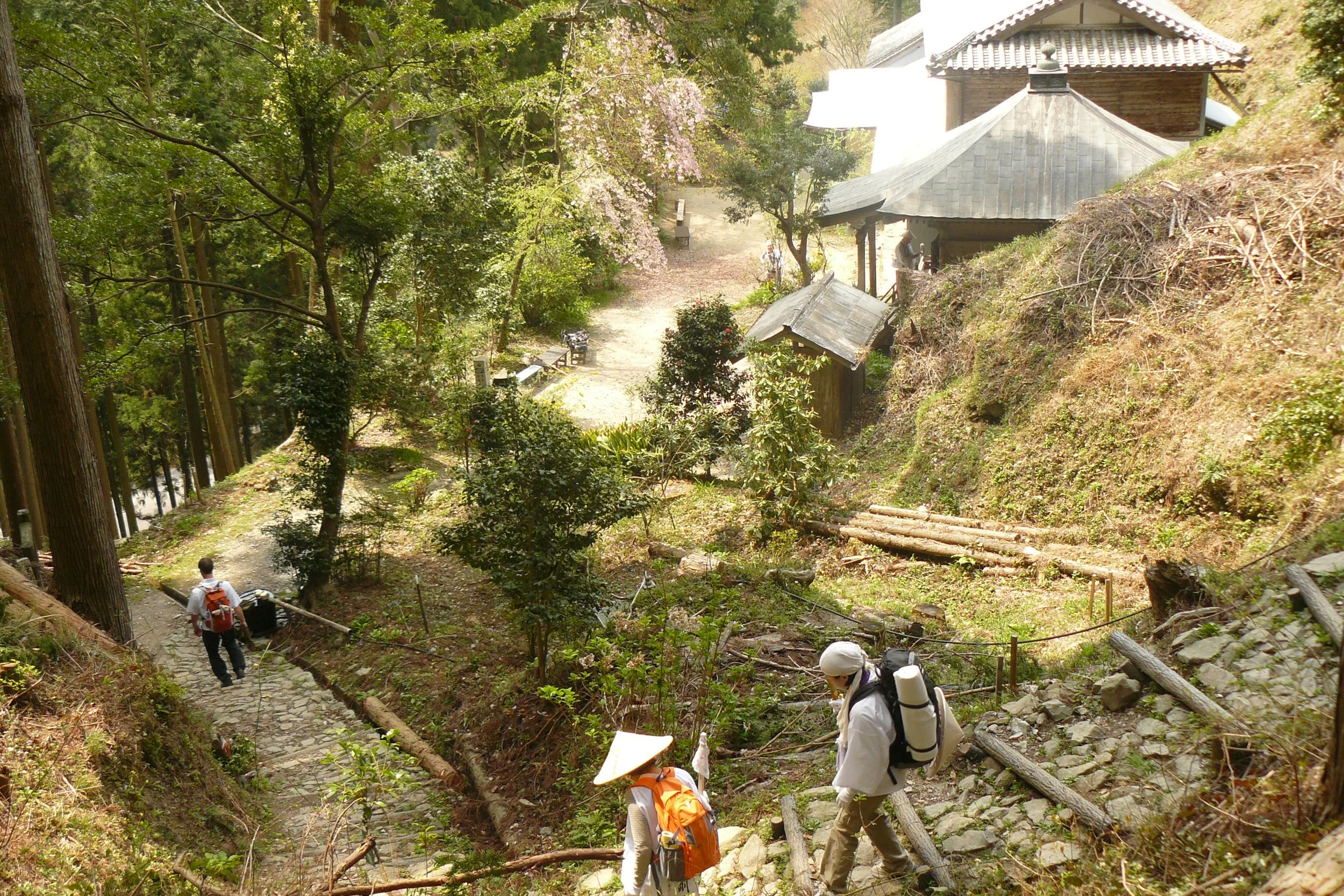
But for a while, we'd even buy each other small gifts, usually food, and we'd smile often, and laughed a lot, and we'd walk. People came out of their homes with gifts called osettai, which the henro is obligated to accept. I received food, tea, money, incense, even energy drinks. There was a young man at a small temple in the mountains who waited all day for henro to come and cooked each pilgrim a hot bowl of soup. The henro walks in the footsteps of Kobo Daishi and in a sense becomes Kobo Daishi. To help the henro is to help Kobo Daishi. This small belief creates a culture of giving, of welcome, of openness. Open doors and open palms. Realizing this was a small enlightenment in itself. I had thought enlightenment was a solitary achievement: the ascetic, the renunciate in the mountains, Bodhidarma in his cave. But would these paths have been open without the sacrifices and gifts of others? I began to see all of my traveling companions, and indeed all of the people in my life, as Kobo Daishi - Buddhas guiding my path, giving and taking away as needed. Who was Kobo Daishi on my journey? A retired bullet train conductor, businessmen from Kobe and Osaka, a housewife, a vending machine saleswoman, a real estate developer, two local bartenders, a teacher from New York…and dozens of others.
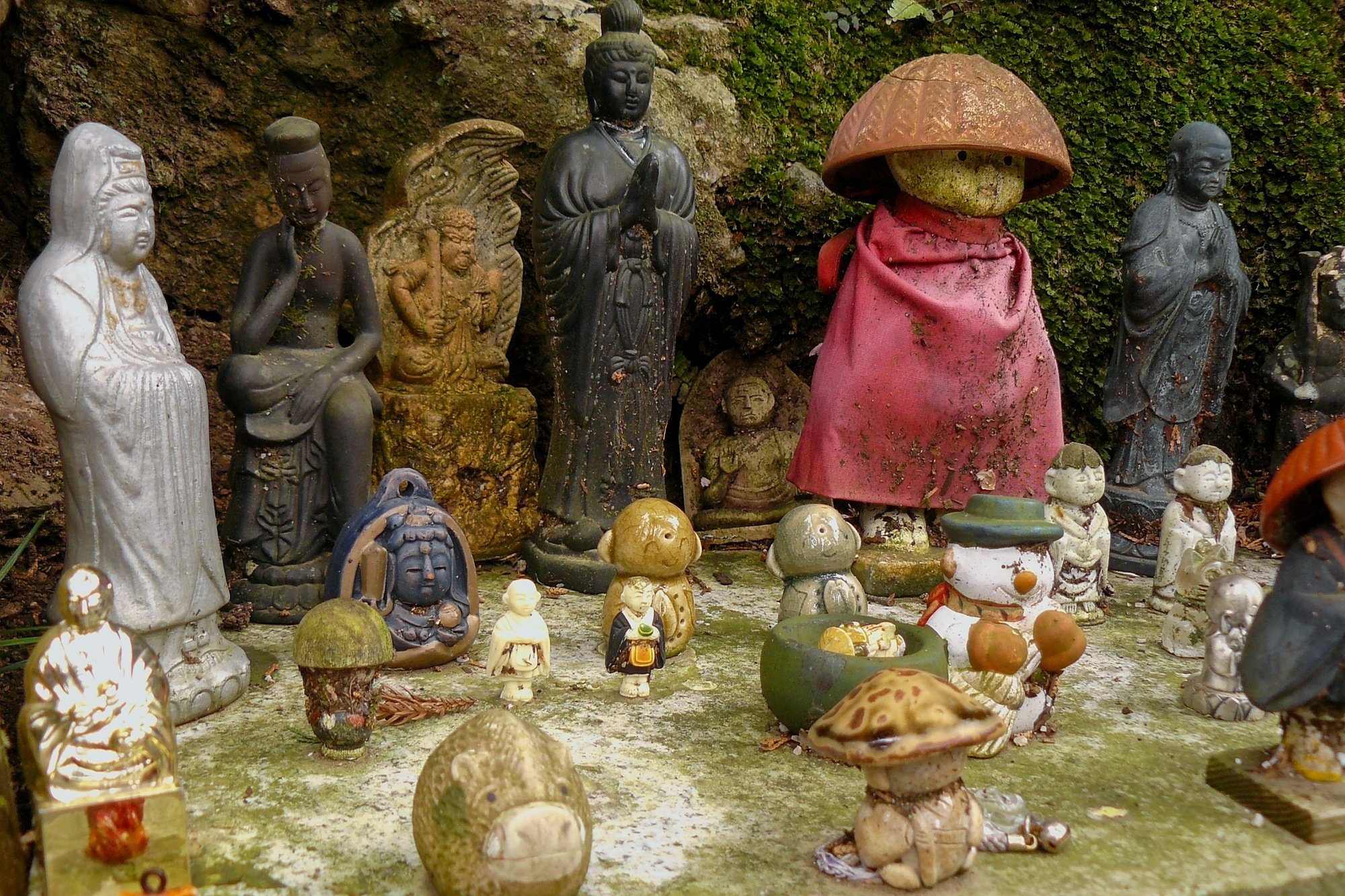
The other shore, enlightenment, is described throughout Buddhism as a mind free of delusion, senses that can pierce illusion, the space where intention and outcome are identical, a place where choice disappears and there is only right action. Days pass quietly on the pilgrimage. Time moves slowly. Slow enough to consider what I had brought with me and how necessary each item was. I dove into my baggage. Years of thoughts, judgments, emotions piled into and on top of each other, weighing on my heart and mind. What are they? Why have I kept them? This shore is mired with confusion and self doubt. This shore is distorted, clouded, and cluttered.
Gate gate pāragate pārasaṃgate.
The pilgrimage promised clarity. I had hoped it would show me not just where I was going but how to walk there. Perhaps it did. Rob was an American who had lived in Japan long enough to belong to neither place entirely. He and a young woman named Yuki had become my closest companions on the road. After a particularly long day the three of us sat down to dinner with a group and chatted long into the evening. Rob and I noticed that Yuki went to her room that night sad and thoughtful. We asked her if all was well. She began to cry and told us many things that had been on her mind and heart these past days. "I'm lost," she said.
The next day she did not come down to breakfast. We said sad but hasty goodbyes and good lucks. Would she continue? Would she find her way? Two months later, she was still walking. May the sun shine on your footsteps. May Kobo Daishi stay by your side.
Bodhi svāhā.
Notes and references
Bosatsu is the Japanese term for Bodhisattva. Bosatsu in this case references Kannon Bosatsu, or Avalokiteshvara, the speaker of the Heart Sutra.
The “…rinse your mouth” comes from www.shingon.org/ritual/daily.html
All quotes from the Heart Sutra are from: Red Pine. The Heart Sutra. New York: Counterpoint, 2005.
Avalokiteshvara is the only deity in the Buddhist pantheon depicted as both male and female.